
- Programme
- Industrialised Timber Building
- Organised by
- IAAC · Mass Madera
- Venue
- Barcelona
- Buildings visited
- 3 CLT buildings
- Next stage
- Galicia
Cambium.Build is taking part in the Professional Programme in Industrialised Timber Building, organised by the Institute for Advanced Architecture of Catalonia (IAAC) and Mass Madera. The programme brings together architects, engineers, manufacturers and public policy officials from Spain around a single building system. The first edition took place in Barcelona, with one day of lectures and another of site visits.
For a company that manufactures CLT and GLT in Argentina, the exchange has concrete value. It allows us to test our own experience against a market where industrialised timber is already part of public housing, government procurement and private investment. The conclusion is that the system has left the experimental stage behind and today operates as an industry.
Five perspectives on the same system
Vicente Guallart · IAAC
The context. The co-founder of IAAC framed the problem in three parts. There is a shortage of housing for a growing population. There is too much CO₂ in the atmosphere. And there are large areas of forest that, without management, end up burning: in Catalonia, 70% of the land is forest. For Guallart, building housing in timber answers all three questions at once.
Eduard Correal · CTFC and INCAFUST
The forest. Correal explained forest management with a simple criterion: the longer a timber product lasts, the longer the carbon stays stored. A building designed for at least fifty years is today the longest-lasting destination.
Certified harvesting does not destroy the forest: it keeps it healthy and reduces the risk of fire.
Gerard Guerra · IMHAB
Public policy. The architect from Barcelona's Municipal Institute of Housing and Renovation presented the City Council's new tender models. They still demand architectural quality and add a criterion: reducing CO₂ emissions during construction. With that criterion, CLT became the reference solution.
Juan Velayos · JV20
Investment. The president of IAAC described how, coming from the financial world, he decided to build a CLT plant in Aragon because the model was sustainable and also profitable. Today he runs residential developments in CLT in several Spanish cities.
Carles Martí Boix · BOIX
Industry. BOIX's general manager explained how the company went from making pallets to operating one of the largest CLT plants in the country. The change began when they saw that the timber they already handled was worth far more than it yielded as pallets.
The five lectures trace the same value chain: a managed forest, an industry that transforms it, capital that finances it and a State that generates demand. It is the chain Cambium.Build is consolidating in Argentina from the forest plantations of the NEA region.
Three buildings, three problems solved
The second day moved the discussion to the building site.
Terrazas para la Vida
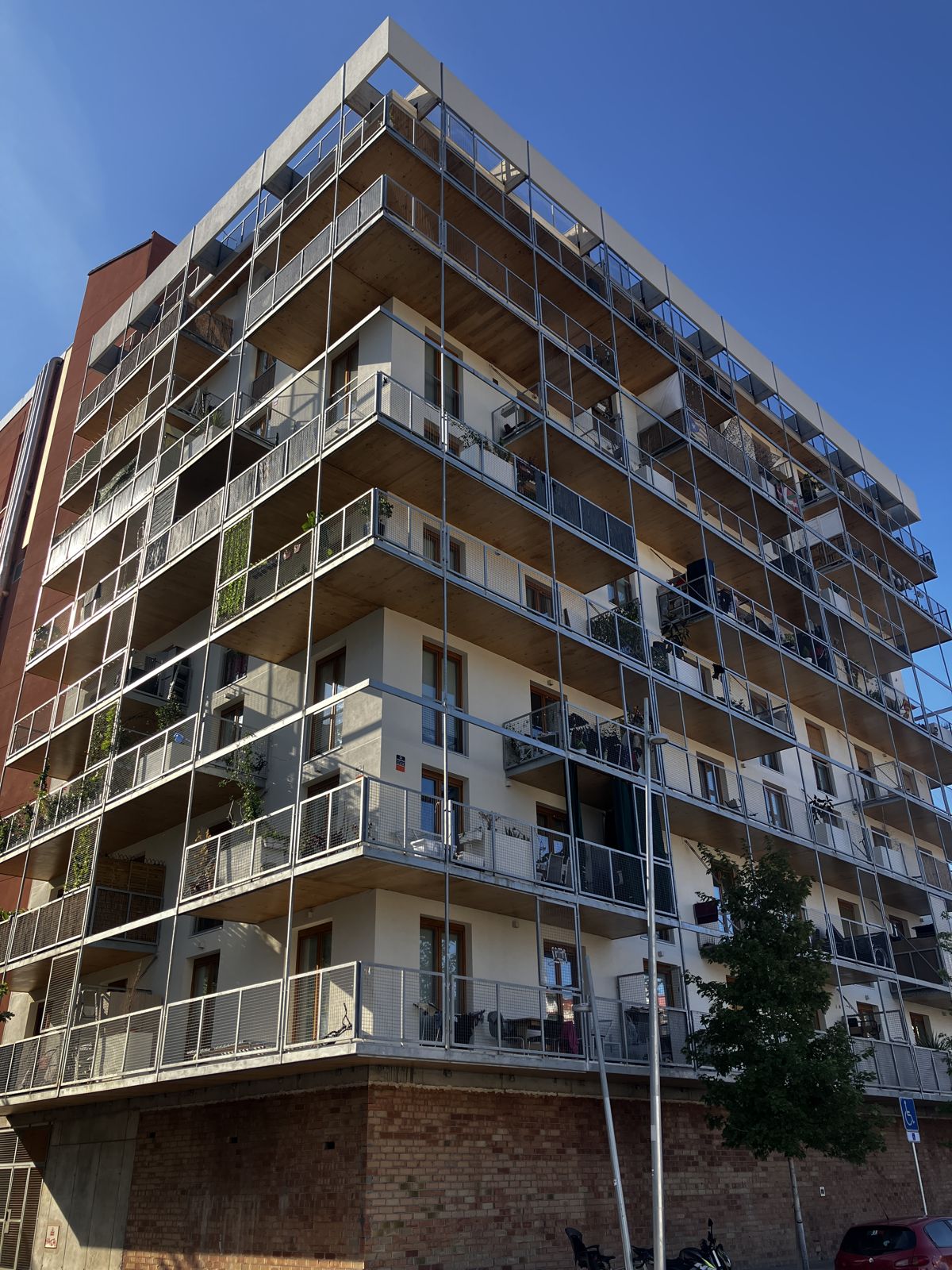
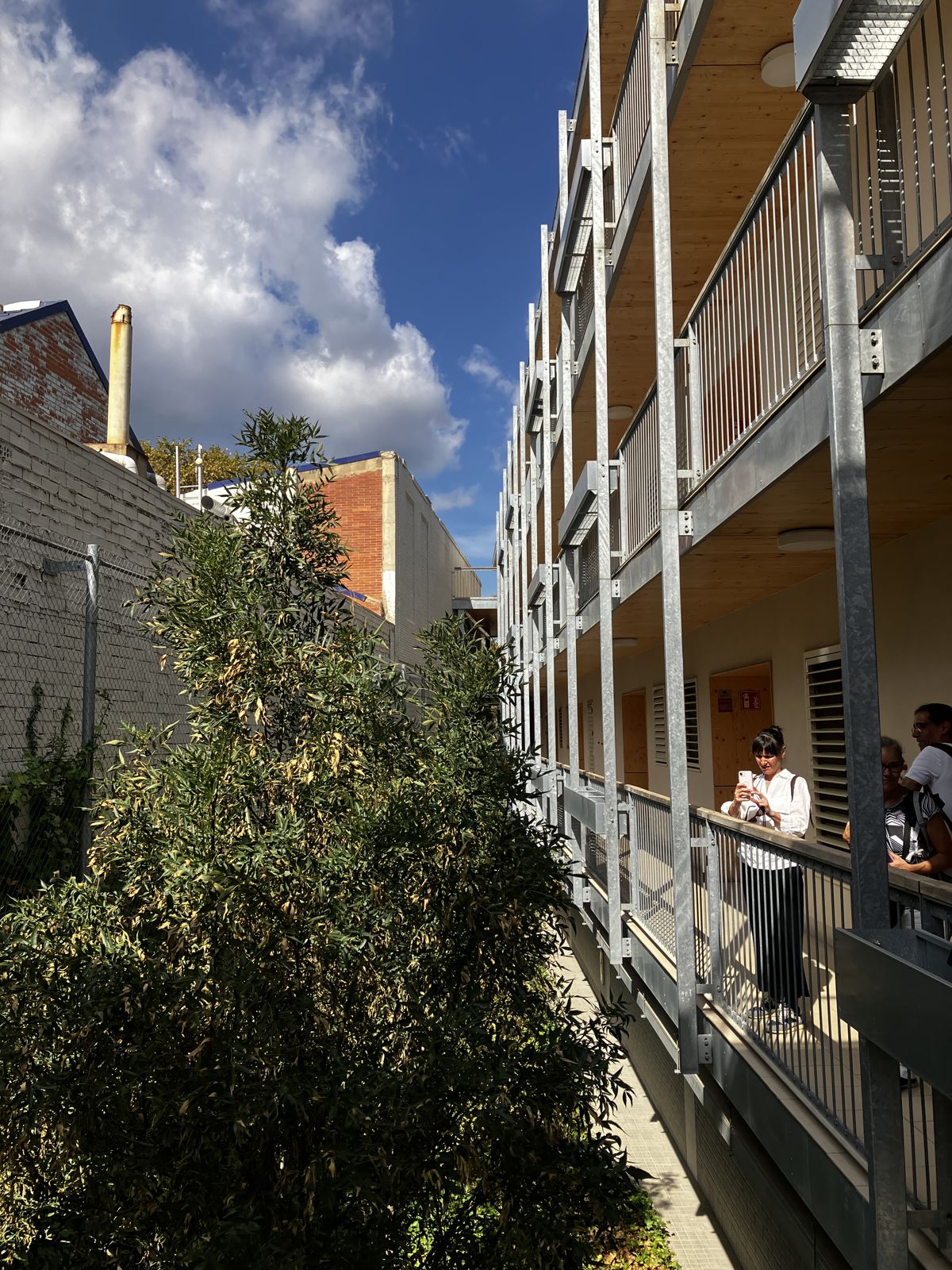
The project by Daniel Ibáñez and Vicente Guallart is public housing designed from the outdoor space. Each unit has a 1.8 m deep terrace that works as an extension of the interior. Perimeter walkways give access to 40 dwellings with cross ventilation.
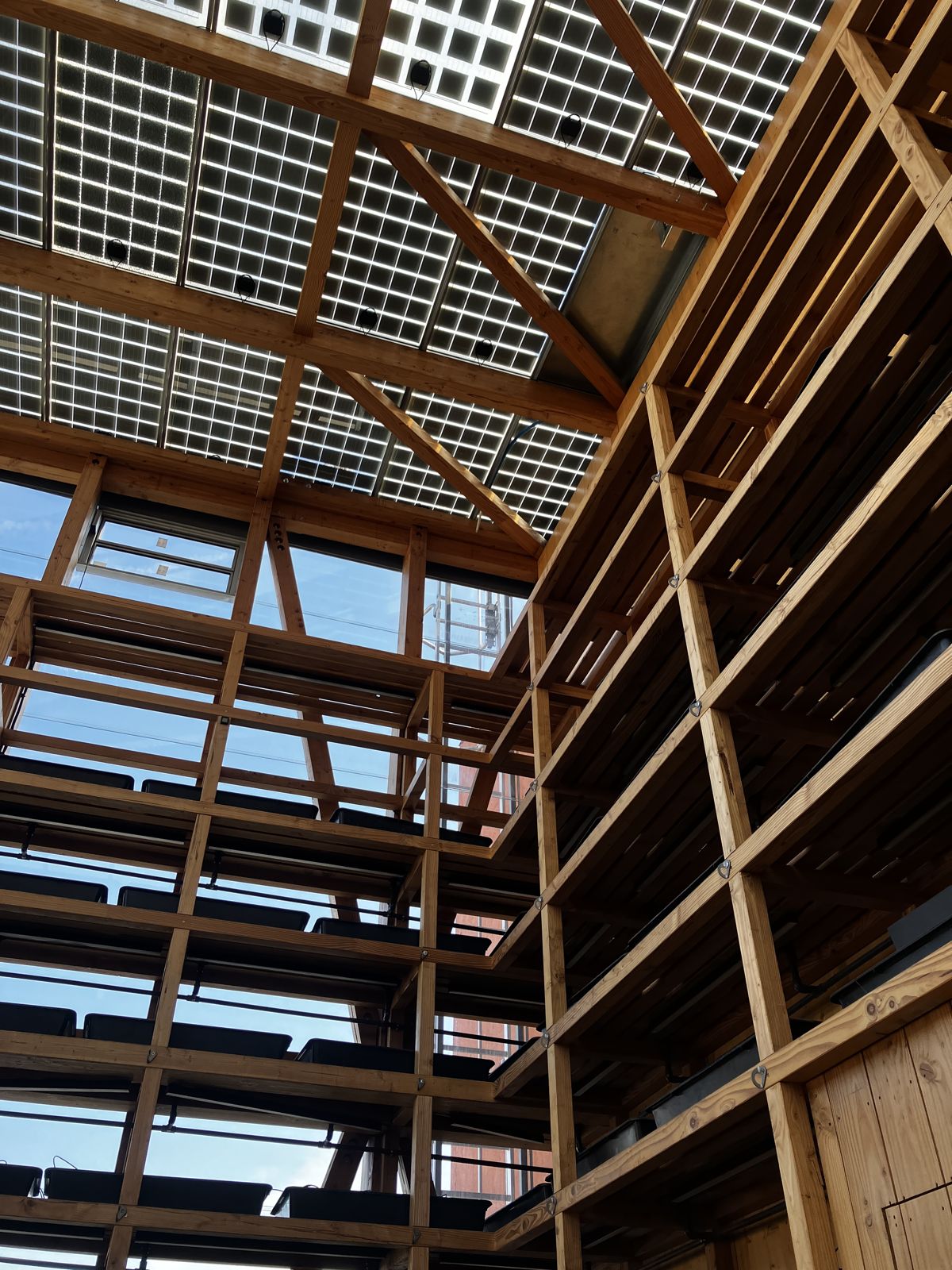
On the roof, a communal timber greenhouse serves for food production and as a meeting place for residents.
Binéfar 22
This public rental housing development in CLT focused the visit on acoustics. Engineer Jesús Oriol, responsible for the acoustic study, explained how impact noise insulation was resolved, one of the aspects that demands most technical attention in a timber building.
Gabriel García Márquez Library
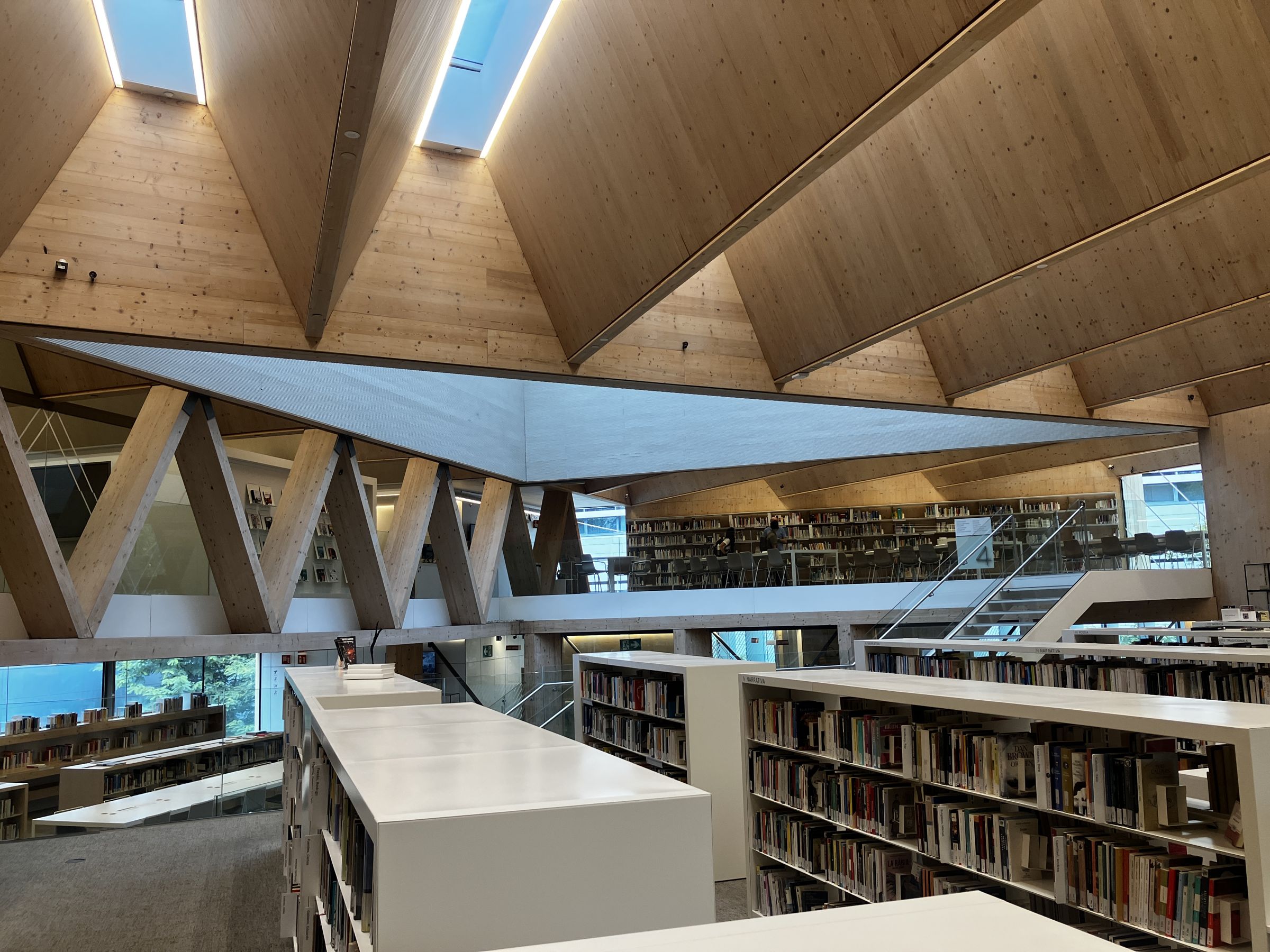
The building by SUMA Arquitectura received the Mies van der Rohe Award and the prize for the best public library in the world. Guillermo Sevillano, partner at the practice, described the design and construction process during a full tour of the building.
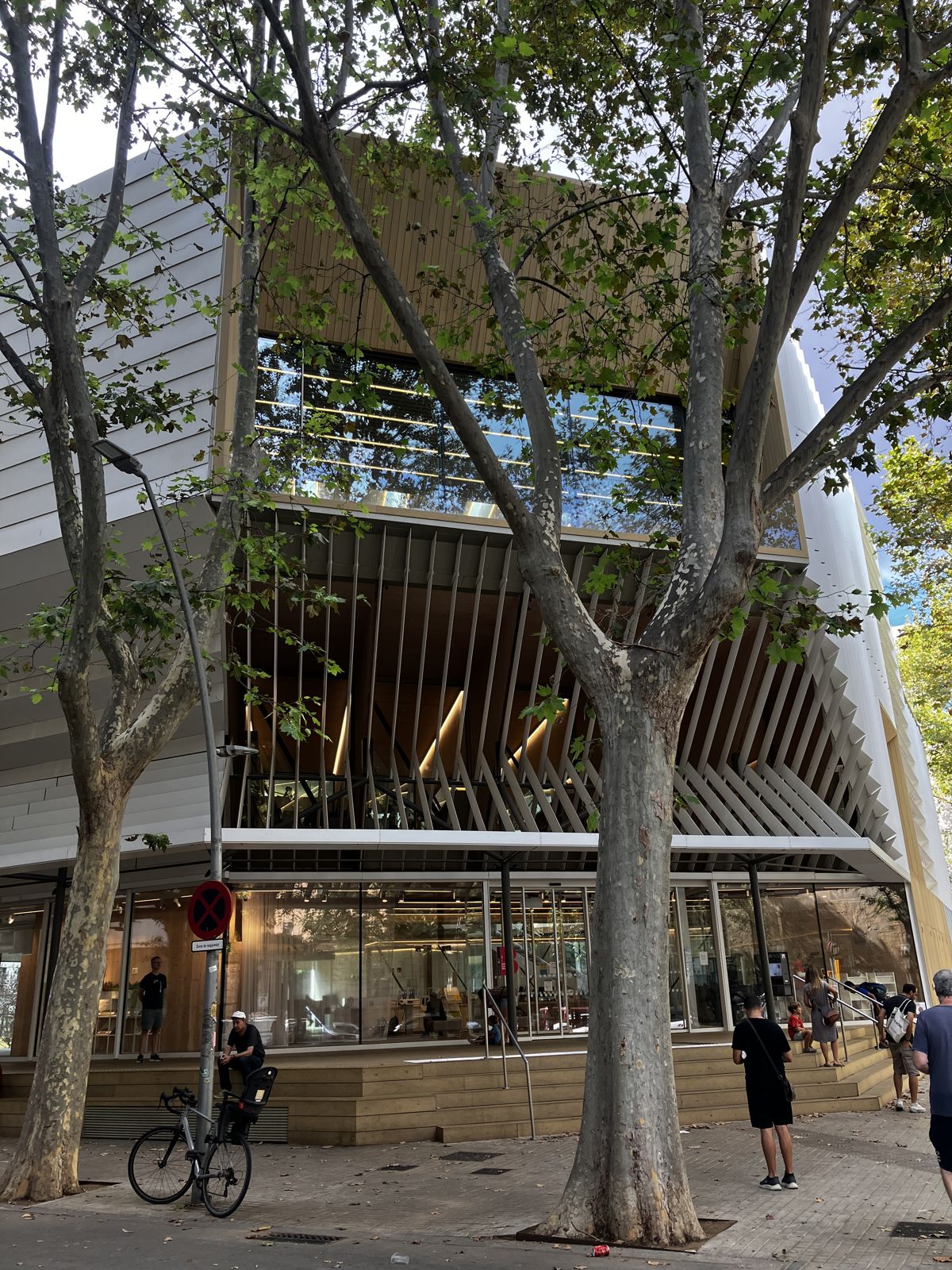
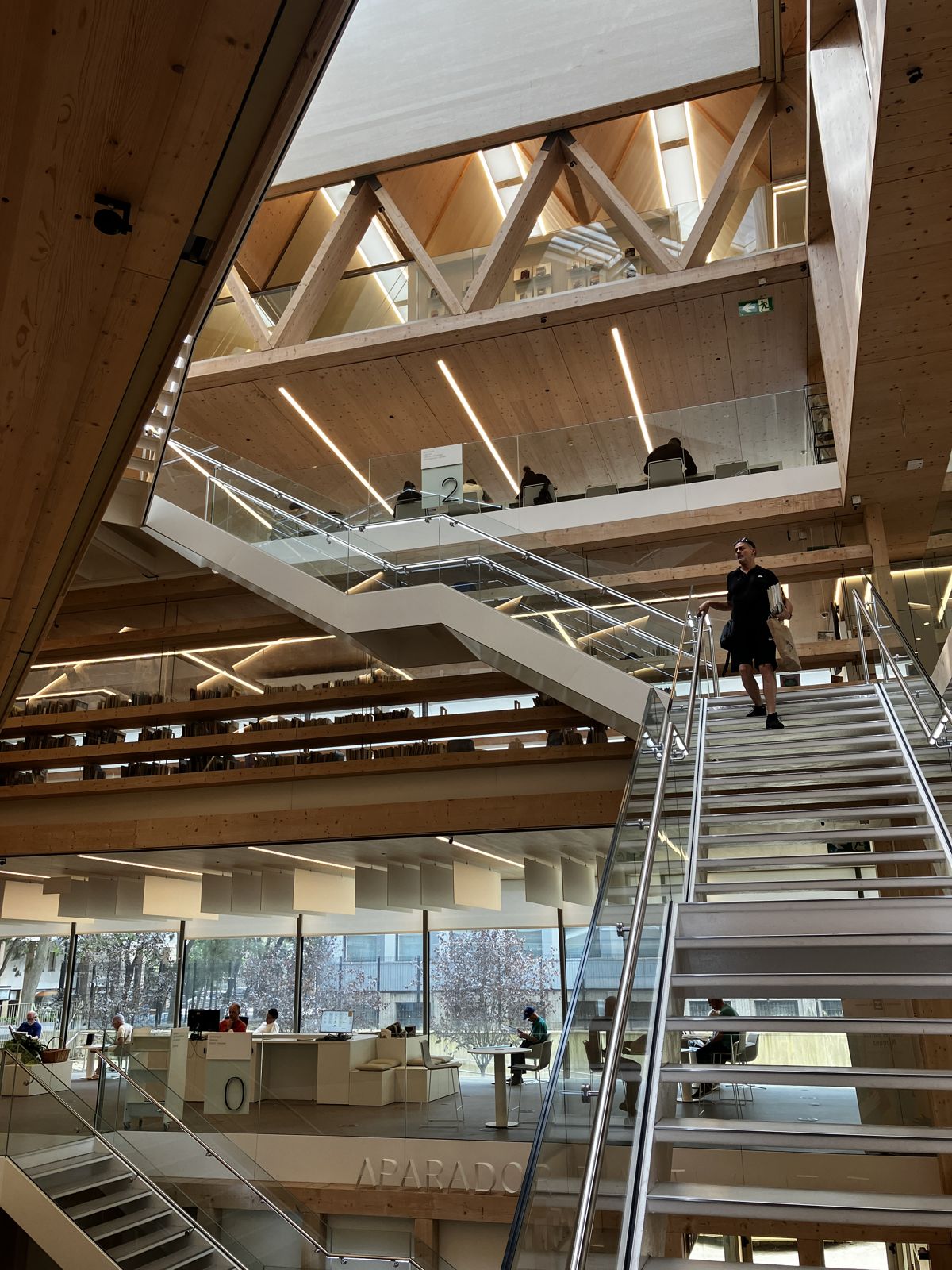
The library shows how far industrialised timber construction can go when technical rigour and architectural ambition are combined.
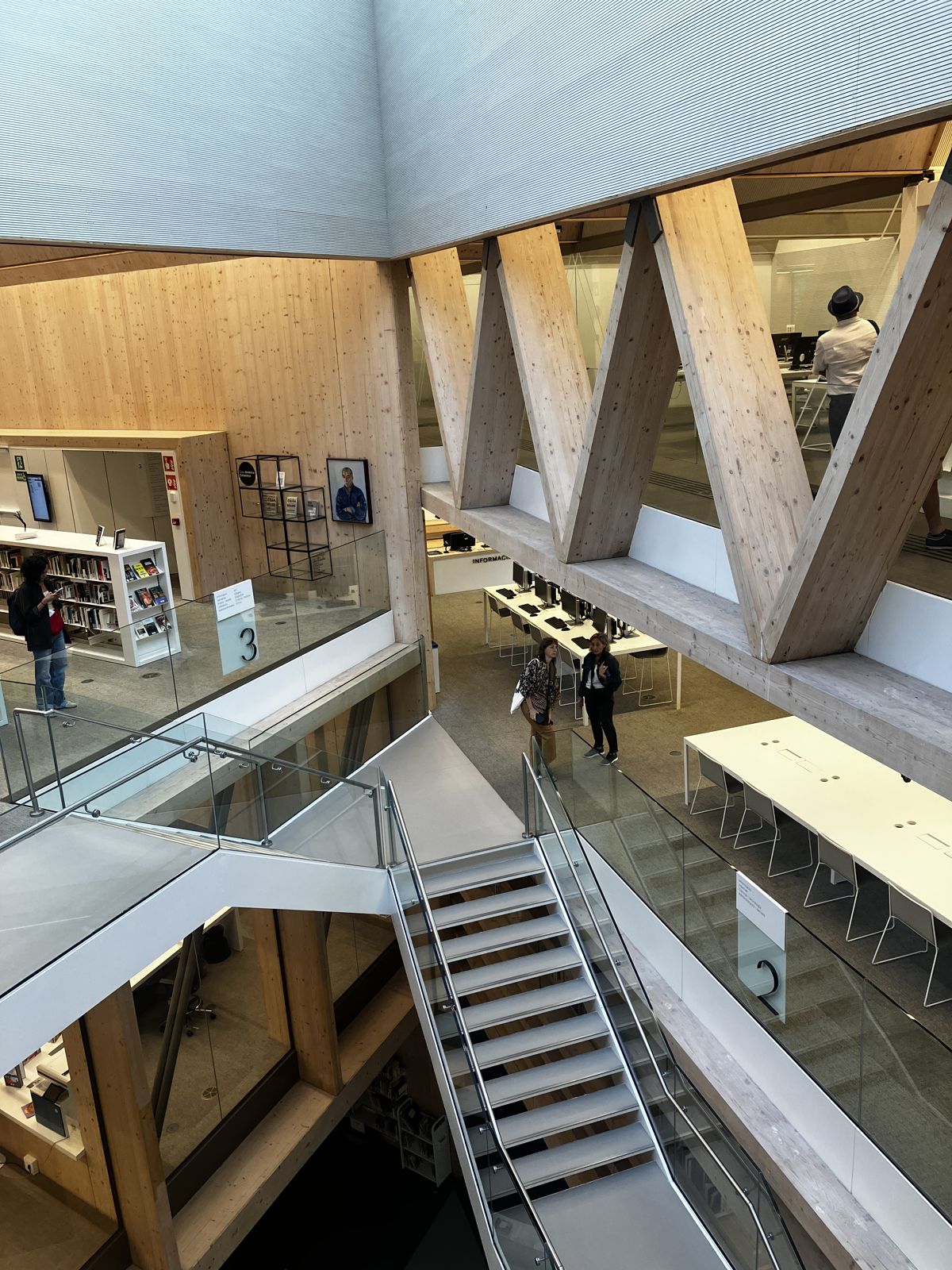
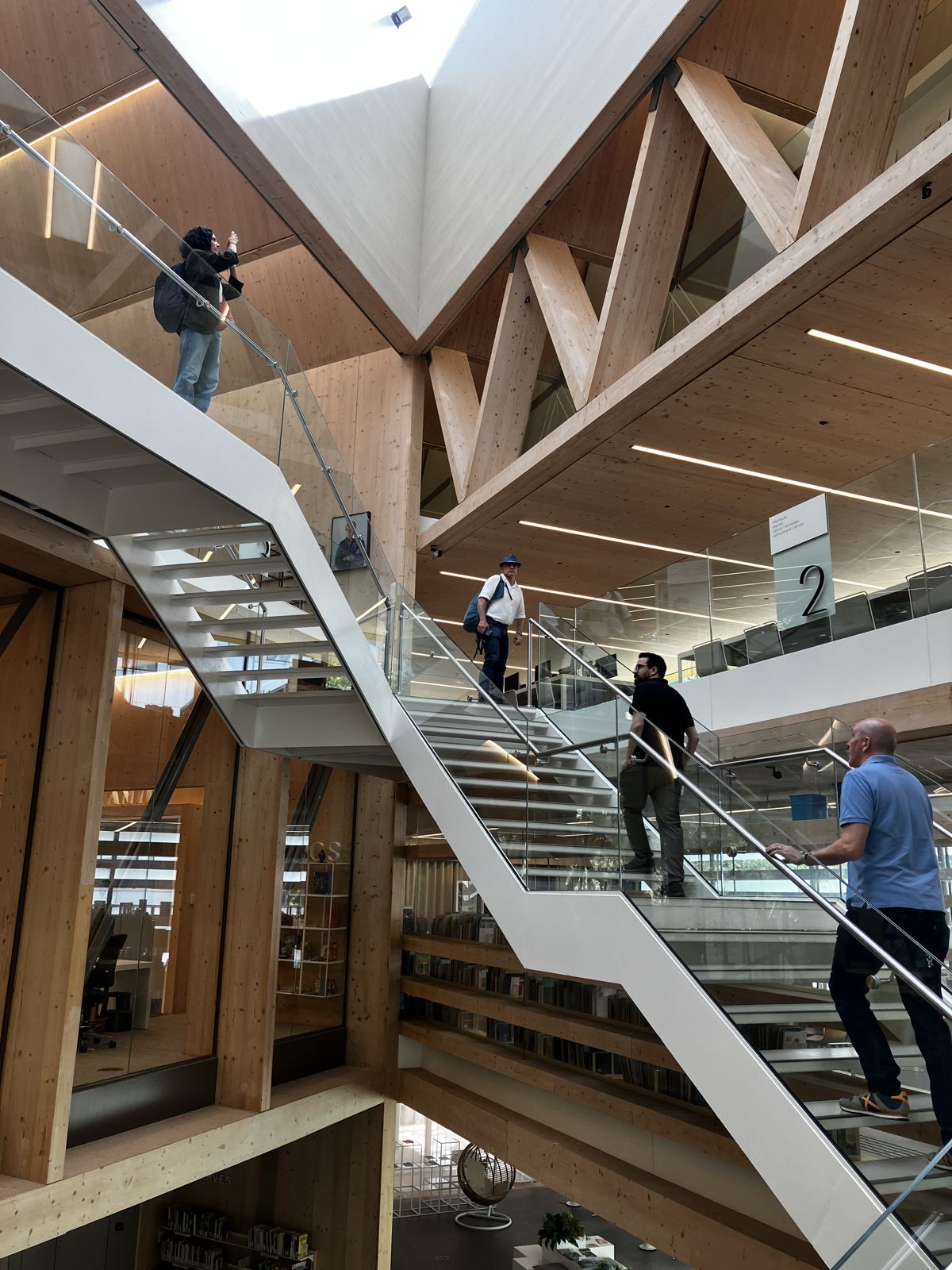
Next stage: Galicia
The programme continues in Galicia in two weeks. Cambium.Build's technical team takes part with a concrete goal: bringing solutions that have already worked on site into its own projects, and strengthening an international professional network.
The industrialised timber industry moves faster when it shares what it learns, and in Barcelona that was clear in every lecture and every visit.